
At Tribeca Dental Care, we strive to help every patient we serve feel healthier and more confident about their smile. One way we are able to achieve this mission is to offer Invisalign orthodontic services to patients who need support in straightening and repositioning crooked teeth. Our professional team offers support in improving healthy oral habits, while our skilled orthodontists develop the best plan of action to meet your personal dental goals.
Why Straight Teeth Matter for Oral Health
Having crooked or misaligned teeth can cause certain issues beyond insecurities with cosmetic appearance. When teeth are twisted in different directions, it makes it difficult to keep them clean, as there may be certain grooves you can’t quite get to. This can lead to the possibility of tooth decay and periodontal disease. Crooked teeth, or a jaw that is out of place, can also cause stress to your chewing muscles, which can lead to regular headaches, TMJ syndrome, or neck, shoulder, and back pain.
Benefits of Orthodontic Treatment
Undergoing orthodontic treatment will only improve your health and confidence. It is easy to forget that oral health has a significant impact on your entire body and its functions. Orthodontic treatment will enhance your chances of having teeth that will last throughout your lifetime.
Signs You May Need Orthodontic Treatment
It is important to see a dentist or orthodontist to determine your dental care needs. During your consultation, your Tribeca Dental provider will use diagnostic tools and practices to determine the plan of action. This includes a clinical exam, gathering your full medical and dental health history, getting plaster models of your teeth, and taking x-rays and photographs of your mouth. With this information, your orthodontist can develop the best treatment for you. Below is a list of conditions that would require orthodontic treatments:
How Orthodontic Treatment Works
At Tribeca Dental, we are an Invisalign only practice that helps for moving teeth, retraining muscles, and realigning jaws.
Invisalign® & Clear Aligners)
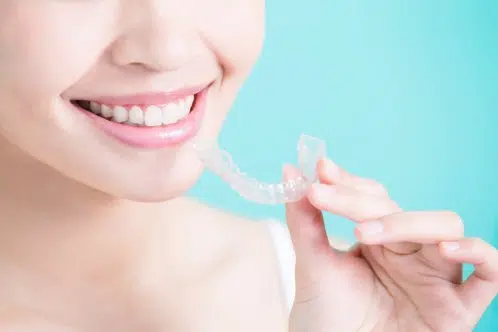
Clear aligners: Used as an alternative to traditional braces, clear aligners are an appliance that you put over your teeth throughout the day, which can be removed while eating, brushing, and flossing.
Traditional Braces
Removable retainers: These devices are used to prevent shifting of teeth that have already undergone alignment treatment, or to prevent thumb-sucking.
Adult Orthodontics in Manhattan
Make sure to book a free consultation appointment at Tribeca Dental to determine the best treatment plan for you. Our skilled orthodontists in New York will walk you through the process of treatment and answer all your questions. Please also review our financing options to ensure you have all you need before beginning treatment. We look forward to helping you build a more confident smile with the affordable braces we offer!
Image: aslysun
Orthodontics FAQs
You may benefit from orthodontic care if your teeth are crowded, crooked, widely spaced, or difficult to clean. Other signs include uneven tooth wear, frequent biting of the cheeks, difficulty chewing, jaw discomfort, or teeth that do not meet properly when you close your mouth. Some alignment concerns are subtle, so an orthodontic consultation can provide greater clarity.
No. Adults can also benefit from orthodontic treatment. Teeth can often be repositioned at any age as long as the teeth, gums, and supporting bone are healthy. Many adults pursue orthodontic care to address long-standing concerns, correct shifting that occurred over time, or prepare their smile for additional restorative or cosmetic dental work.
Properly aligned teeth are generally easier to brush and floss than crowded or overlapping teeth. Improving alignment may reduce areas where food particles and plaque collect, helping lower the risk of tooth decay and gum disease. A balanced bite can also distribute chewing pressure more evenly and reduce unnecessary wear on certain teeth.
Treatment time varies depending on the type and complexity of the alignment or bite concerns being corrected. Minor tooth movement may require only several months, while more involved cases can take a year or longer. Your treatment plan, oral health, and ability to follow your provider’s instructions can all affect the timeline.
You may experience mild pressure or tenderness as your teeth begin moving or after your appliance is adjusted. This discomfort is generally temporary and can often be managed with soft foods and over-the-counter pain relief, when appropriate. Contact your dental provider if you experience severe, persistent, or unusual discomfort during treatment.
Excellent oral hygiene is especially important while your teeth are being repositioned. Brush thoroughly at least twice daily, floss as directed, and attend regular dental cleanings and exams. Your provider may recommend special cleaning tools based on the orthodontic appliance you use. Following dietary and care instructions can also help prevent cavities, gum irritation, and treatment delays.
Most patients need a retainer after active treatment. Teeth naturally tend to shift over time, and a retainer helps preserve their corrected positions. Your provider will explain which type of retainer is appropriate and how frequently it should be worn. Consistent retainer use is one of the most important ways to protect your results.
By submitting this form you agree to be contacted via phone/text/email.
Orthodontics FAQs
You may benefit from orthodontic care if your teeth are crowded, crooked, widely spaced, or difficult to clean. Other signs include uneven tooth wear, frequent biting of the cheeks, difficulty chewing, jaw discomfort, or teeth that do not meet properly when you close your mouth. Some alignment concerns are subtle, so an orthodontic consultation can provide greater clarity.
No. Adults can also benefit from orthodontic treatment. Teeth can often be repositioned at any age as long as the teeth, gums, and supporting bone are healthy. Many adults pursue orthodontic care to address long-standing concerns, correct shifting that occurred over time, or prepare their smile for additional restorative or cosmetic dental work.
Properly aligned teeth are generally easier to brush and floss than crowded or overlapping teeth. Improving alignment may reduce areas where food particles and plaque collect, helping lower the risk of tooth decay and gum disease. A balanced bite can also distribute chewing pressure more evenly and reduce unnecessary wear on certain teeth.
Treatment time varies depending on the type and complexity of the alignment or bite concerns being corrected. Minor tooth movement may require only several months, while more involved cases can take a year or longer. Your treatment plan, oral health, and ability to follow your provider’s instructions can all affect the timeline.
You may experience mild pressure or tenderness as your teeth begin moving or after your appliance is adjusted. This discomfort is generally temporary and can often be managed with soft foods and over-the-counter pain relief, when appropriate. Contact your dental provider if you experience severe, persistent, or unusual discomfort during treatment.
Excellent oral hygiene is especially important while your teeth are being repositioned. Brush thoroughly at least twice daily, floss as directed, and attend regular dental cleanings and exams. Your provider may recommend special cleaning tools based on the orthodontic appliance you use. Following dietary and care instructions can also help prevent cavities, gum irritation, and treatment delays.
Most patients need a retainer after active treatment. Teeth naturally tend to shift over time, and a retainer helps preserve their corrected positions. Your provider will explain which type of retainer is appropriate and how frequently it should be worn. Consistent retainer use is one of the most important ways to protect your results.